On this page
- Find out the job before you answer the feature
- Four kinds of no, and the one promise each allows
- The reason matters more than the verdict
- How to say no to feature requests: scripts for each kind
- The "I'll pass it on" trap
- When the customer is big, or angry, or about to leave
- Keeping the record in Talvo
- Reviewing the no's every quarter
- Where Talvo falls short
- Frequently asked questions
"Can you add a way to export this as a PDF?" It arrives in chat on a Tuesday, from a customer who has been with you for a year and likes you. You already know the answer. The answer is no, or at least not soon, and the next ninety seconds will decide whether they walk away feeling heard or brushed off.
This guide is about that moment: how to say no to feature requests in a single conversation, with one customer, in chat or email. It's deliberately narrow. How to say no publicly, with a "Not planned" status and a team response on a roadmap page, is covered in our guide to public feedback boards. A ready-made set of short decline templates is in the live chat canned responses library. What follows is the thinking and the scripts those two don't cover.
Find out the job before you answer the feature
Most feature requests are a solution someone already picked for a problem you haven't heard yet. "Add PDF export" might mean "my accountant needs a file," "I want to email this to a client" or "your print view is broken." Three of the answers to those are different, and only one needs a new feature.
Before you decline, ask. Not as a stalling tactic, but because the answer may change your answer. Three questions cover most cases.
What are you trying to get done when you reach for this?
What do you do today instead, and where does that fall short?
Who else needs to see the result, and in what form?
Keep it to one or two in a chat, since customers don't want a survey. In email you can ask all three, framed as help: "so I can point you to the quickest route today."
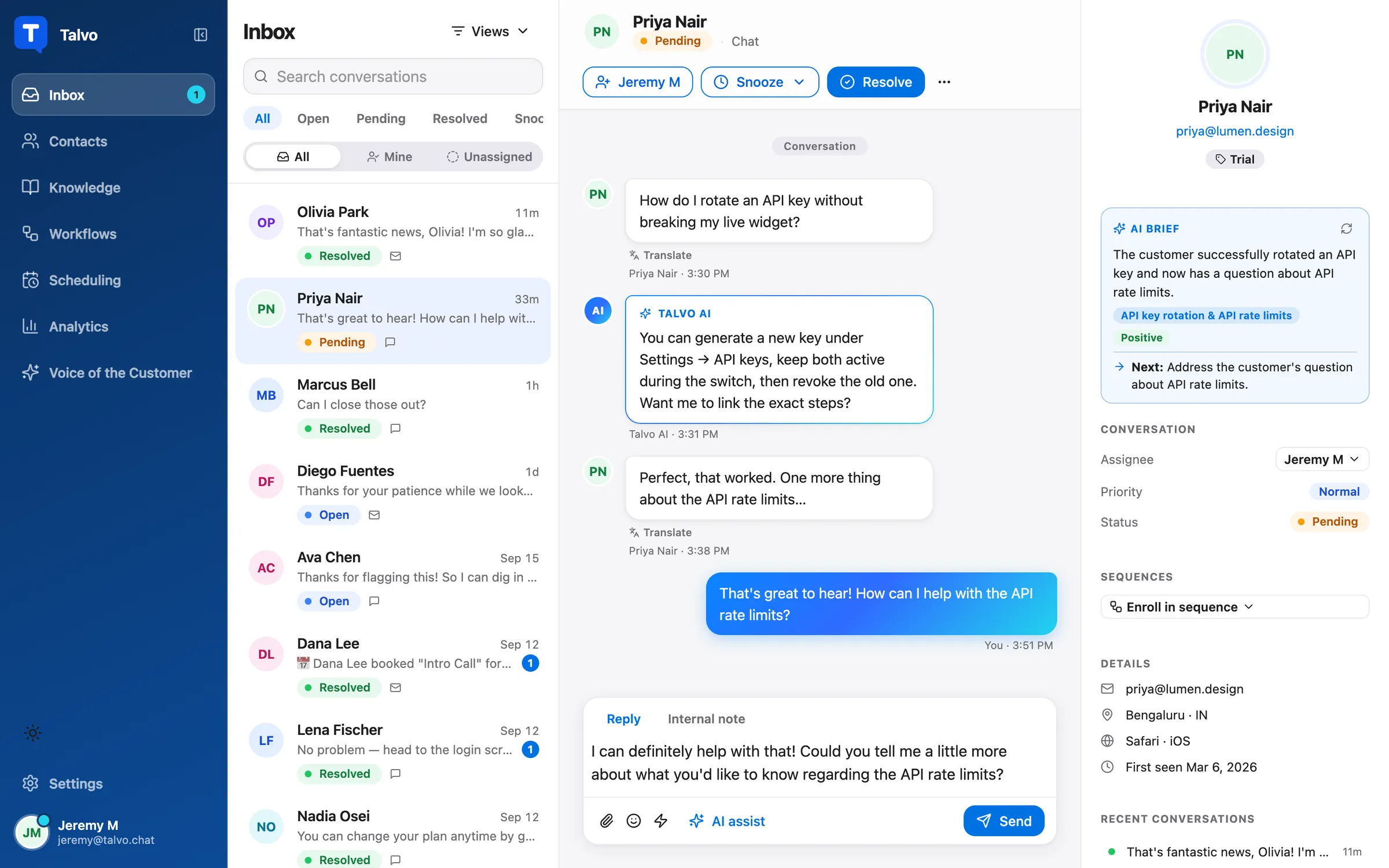
This step does something else too. A person asked about their real problem feels heard before you've said a word about the feature, which makes the no easier to accept.
Four kinds of no, and the one promise each allows
Teams say no in one flat voice, but there are four different situations, and each calls for a different reply. Naming which you're in stops you from inventing hope you don't have.
| The no | What's true | What you can promise | What you can't |
|---|---|---|---|
| We already do it another way | The need is met by something existing | A walkthrough, today | Anything about a new feature |
| Not now | It's plausible but behind other work | That you recorded it and what would change the priority | A date, or "soon" |
| Not ever | It conflicts with what the product is | A clear reason and an alternative | That you'll "keep it in mind" |
| Not for you | The customer needs a different tool | An honest recommendation | Retention at any cost |
The fourth is the hardest and the most underused. Telling someone their need is better served elsewhere costs you a customer now and tends to buy trust you'll collect later. It's only right when it's true, though, so don't use it as a polite exit from a request you could simply meet.
The weak spot in all four is the word "soon." Customers hear it as a date, and it stays in their heads long after you've forgotten saying it.
The reason matters more than the verdict
It's tempting to think that a firm no needs a short reply, so that you're not lingering over a decision that's made. The opposite is closer to true.
The NSW Ombudsman's manual for handling unreasonable complainant conduct makes a point about fairness that carries over here. It was written for public-sector complaints rather than software, so treat this as borrowed rather than proven for feature requests. Its observation is that people who see a process as fair, and feel they were treated with respect, are more likely to accept a decision they didn't want. In a feature conversation that means three things: they should be able to tell you actually read the request, they should understand the reason behind the decision, and they should know what happens to their request now.
A bare "we can't do that" gives them none of the three. A short reason and a next step gives them all.
How to say no to feature requests: scripts for each kind
All of these are written from scratch. Square brackets are for the agent to fill in by hand; double braces fill in from Talvo, with a fallback after the bar so no one receives "Hi ,". Change at least one sentence before you send, so the reply answers this customer.
The need is already met
Good news: you can get most of the way there today. [Steps, in two or three short lines]. That gives you [what they wanted]. If it still doesn't do what you need, tell me where it breaks and I'll take that to the team.
The email version adds the "why" and a link: "I'm pointing you to this route because [reason], and the page that covers it is here: [help article]."
Not now
Thanks for the detail on this, {{contact.first_name | there}}. It makes sense, and it isn't planned for the near term, because [the real reason: what the team is working on instead]. I've recorded it with your use case: [their need, one line]. What would move it up is [honest trigger: more people asking, a specific integration, a change in direction], and I can't give a date.
The unpopular line in that script is the last one. It's the point of the script. Avoid "we're looking into it" unless somebody is.
Not ever
I'll be straight with you: we're not going to build this. [Product]'s focus is [one sentence], and [the feature] would pull it toward [something else]. That's a choice about what we do well, and I know it's not the answer you wanted. For the problem you described, the closest we can do is [workaround]. Would that cover it?
Not for you
Having heard what you need, [what they need], I think a tool built around [that job] will serve you better than we will, and I'd rather say so now than have you work around us for months. If you do want to stay, here's what we handle well for your case: [one or two honest strengths]. Either way, I'll help you move your data out cleanly if you choose to leave.
Only send the last sentence if it's true. If it is, it's the sentence that matters most.
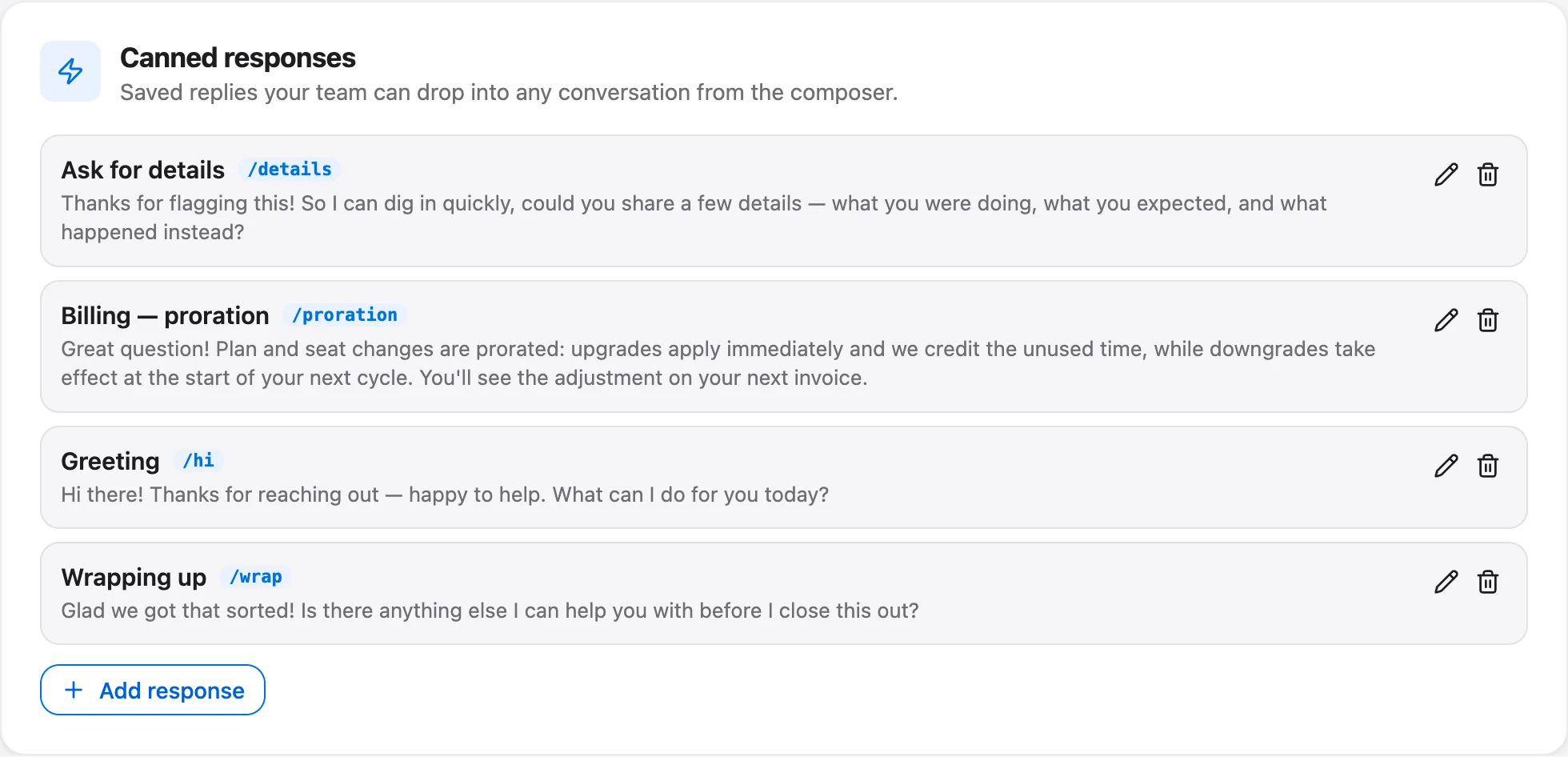
The "I'll pass it on" trap
Nothing is more common than "I've passed your suggestion to the team," and nothing is more often untrue. If it goes nowhere, the customer finds out the same day your reply becomes the whole interaction. Say exactly what happens to a request, and then make it happen.
- Is it actually logged somewhere the team will see (a board, a tracker), not only in your head?
- Does your reply say where it went, and what you will and won't do next?
- Have you avoided "soon", "we're considering it" and "on the roadmap" unless they are literally true?
- Did you note on the conversation what you promised, so the next agent doesn't contradict it?
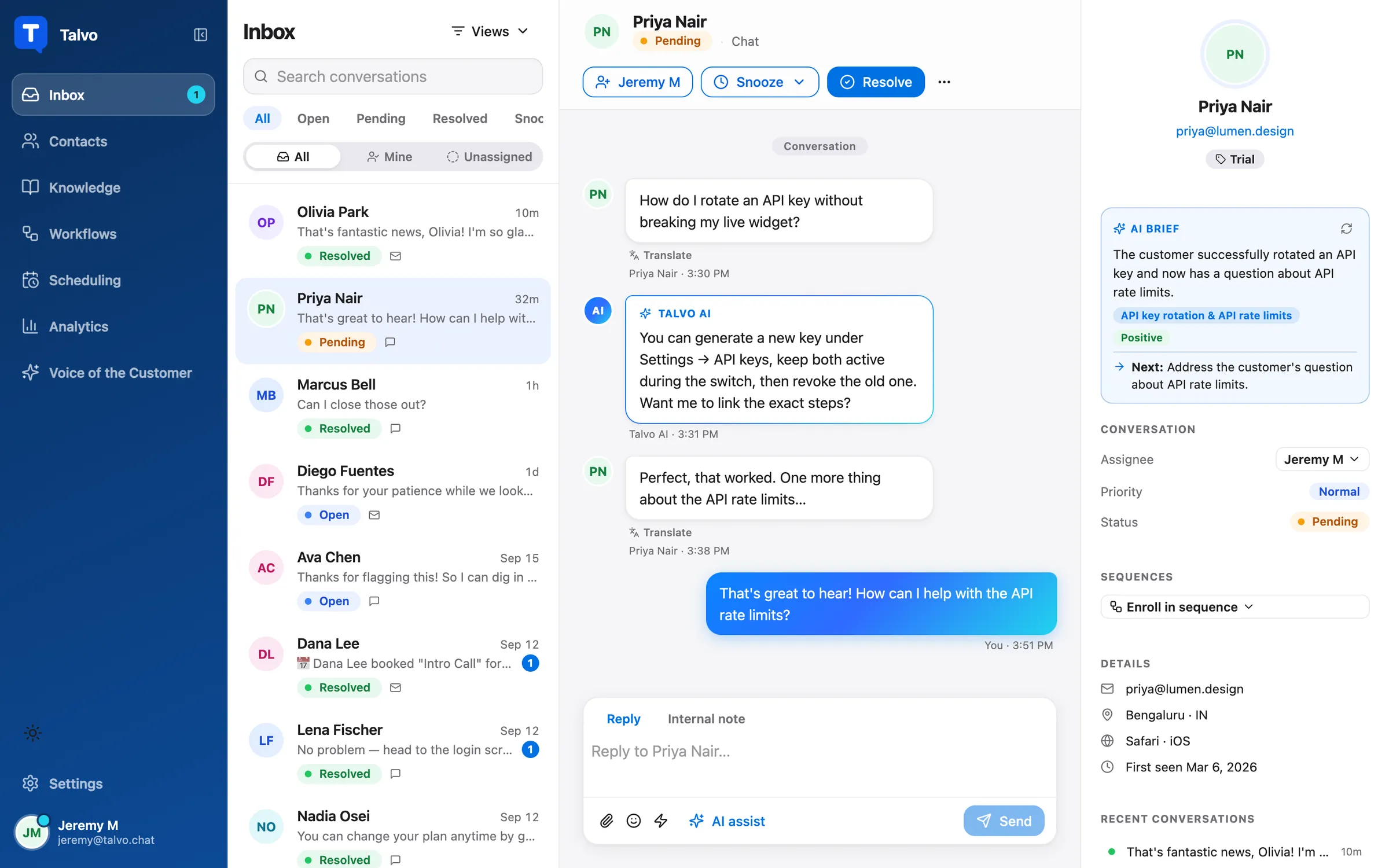
When the customer is big, or angry, or about to leave
The hardest version of this conversation has money in it. A large customer says the missing feature is a dealbreaker, and the temptation to promise it is strong.
Decide three things before you reply. Who has the authority to change the roadmap? If it isn't you, say so in the reply, and say who decides. What are you actually willing to offer instead: a workaround, a custom arrangement, a better price, help migrating? And is the loss one you can afford? Sometimes the honest answer is yes.
I can't promise this, and I don't want to say yes today and walk it back in a month. Here is what I can do: I'm taking this to [name], who makes that call, along with what it's worth to you. You'll hear from them by [date]. In the meantime, [workaround or temporary offer].
That script commits you to a person and a date, which is the only kind of promise worth making here. If the customer is angry rather than just disappointed, the sequence in how to respond to angry customers comes first, and the no comes after they feel heard.
No data exists that tells you how often a clear no keeps a large account, so be careful of anyone who quotes you a figure. Treat each case as a judgment call and write down what you decided.
Keeping the record in Talvo
Say no well and you still have work to do afterward, or the next customer asks for the same thing and you start from zero. Talvo makes the logging part cheap, with a few limits you should know about.
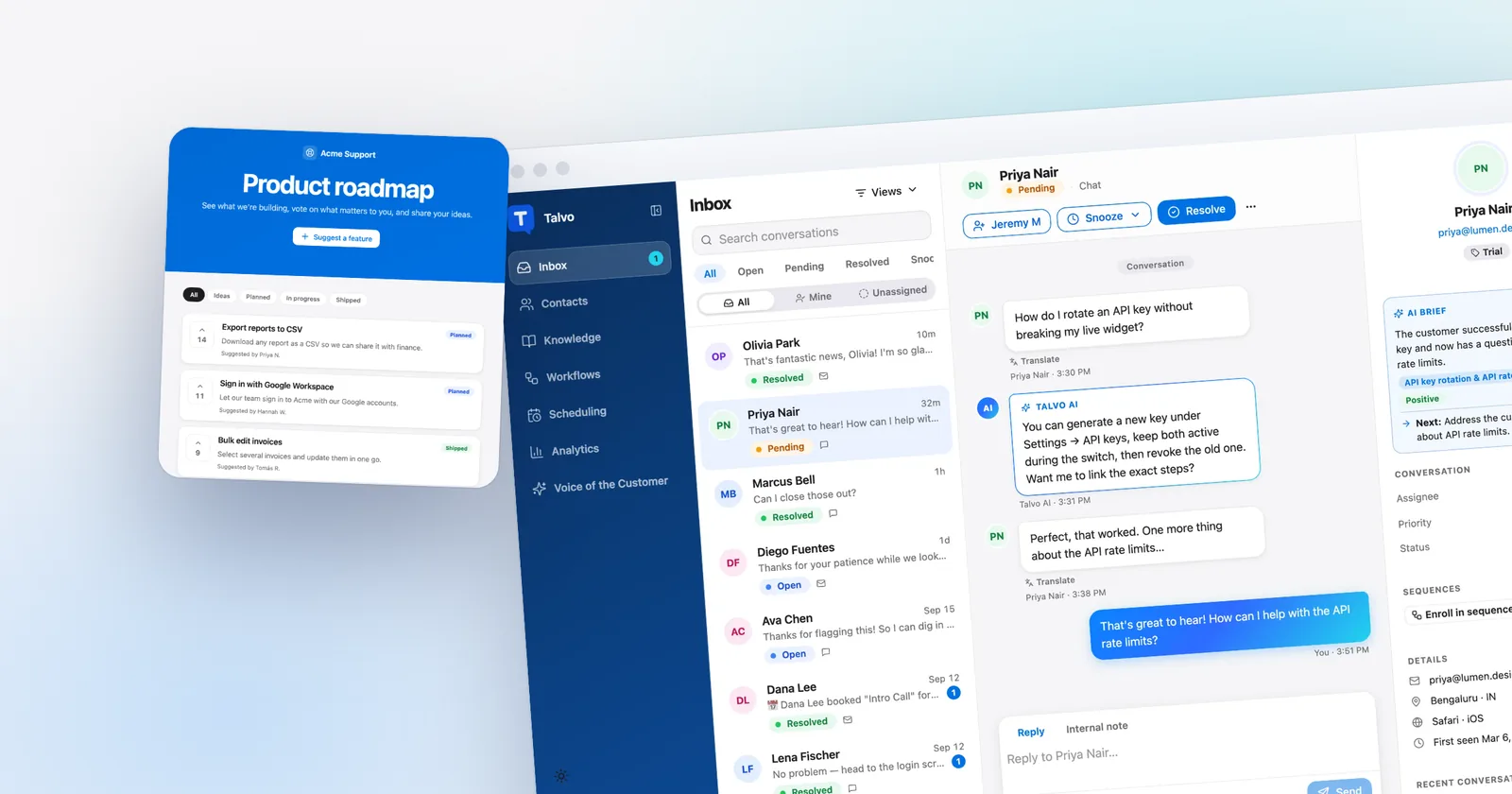
A teammate can turn a conversation into a feature request on the board. It's posted under the customer's name with one vote, and an internal note is added to the conversation. Two cautions follow. The customer is not told, so your reply has to say what you did. And before you post a customer's request, check what your board shows publicly; if you're unsure the customer would want to appear there, ask first.
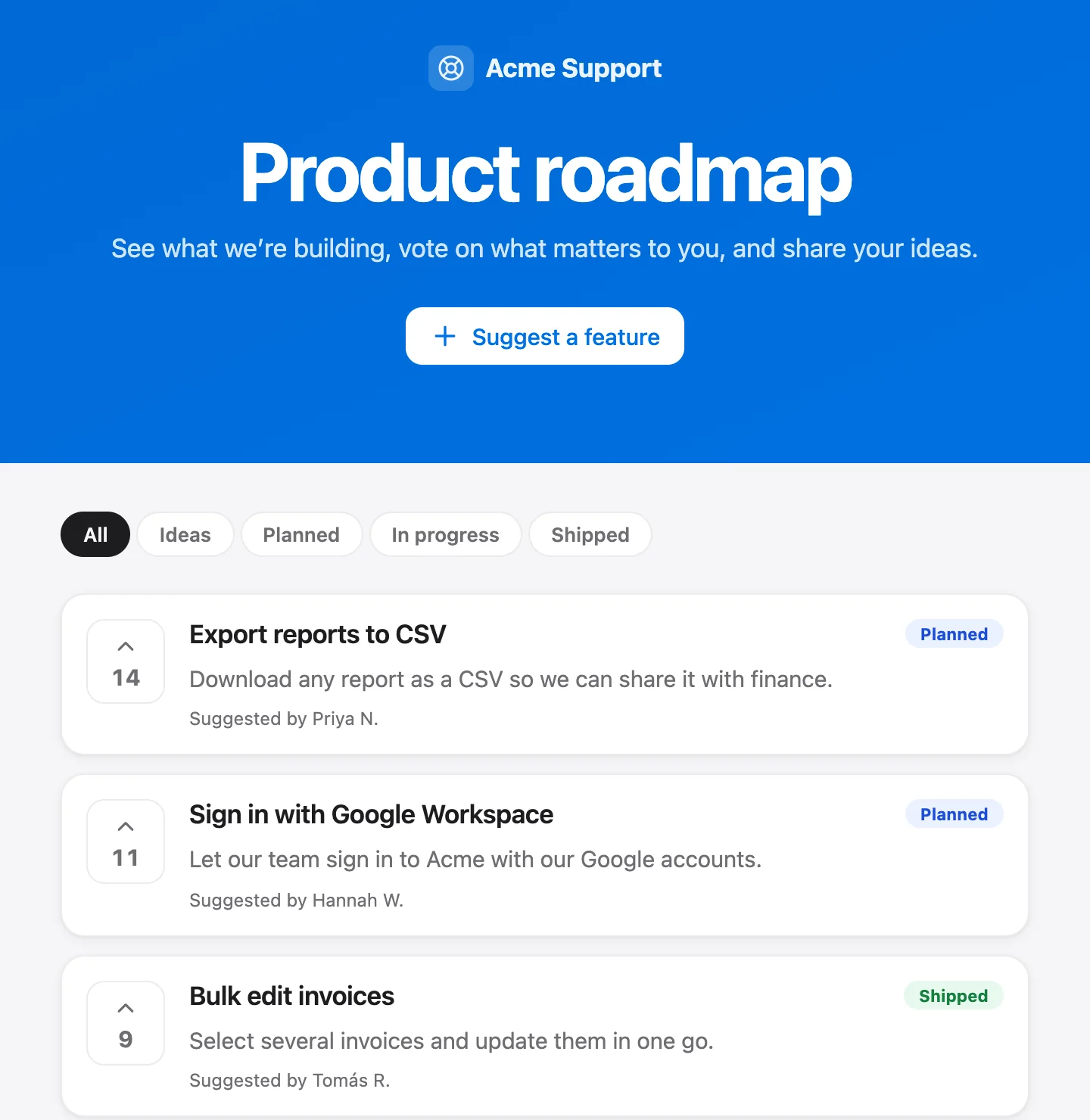
Owners and admins manage the feedback board from Settings → Roadmap. They can mark a request Not planned, write a public response that shows their name and the date, and merge duplicates into one post, which then carries the combined votes. One caution on merging: votes are summed, so a person who voted on both posts counts twice. The board has five statuses (Under consideration, Planned, In progress, Shipped, Not planned), no comments, and every plan includes it, even Free.
Don't count on the board to tell the customer anything. Posting from a conversation doesn't message them, and voting is anonymous, so plan on following up yourself. When a request ships, reply in the original conversation and link the changelog entry. That is why the note on the conversation matters.
For the wording of a public Not planned reason, the public feedback board guide has it.
Reviewing the no's every quarter
A no from March can be wrong by September. Once a quarter, open the requests you declined and read them again against what the product has become. Look for ones with many votes, ones several large customers asked for, and ones the product has drifted toward. Reverse a few. When you do, tell the people who asked, one at a time, and tell them what changed your mind.
It's also worth reading the declined list for patterns. If five customers ask for the same thing in different words, the problem isn't five requests, it's one gap you've been answering five ways.
- Ask what they're trying to doOne or two questions, before the answer.
- Pick which kind of no it isAlready met, not now, not ever, or not for you.
- Give the reason and one next stepUse the matching script, and edit a sentence so it's about them.
- Log it where the team will see itTurn the conversation into a request, and tell the customer you did.
- Note what you promisedPut it on the conversation, so nobody contradicts you.
- Revisit it each quarterReverse the ones that deserve it, and tell the people who asked.
Where Talvo falls short
Talvo doesn't message a customer when you post their request, and voting is anonymous, so following up is on you. Visitors can't comment on board posts, and there's no approval queue before a request goes public, though admins can delete one afterward. The AI agent answers only from published help articles and any internal files and private snippets you add for it, so a request to build something is most likely to end in a hand-off, and the reply is yours to write. And Talvo is new and in beta, with no customer data to show on how these conversations go. The method and the scripts work in any inbox.
Frequently asked questions
How do you say no to a customer politely?
Give the answer early, give the real reason in a sentence or two, and offer something you can do instead. Avoid vague comfort such as 'we'll look into it' when you won't. A clear no with a reason and a workaround is kinder than a hopeful maybe.
How do you decline a feature request?
First ask what the customer is trying to get done, because the real need may already be met. Then decide which kind of no it is: already possible, not now, not ever, or a poor fit. Use the matching reply, state what happens to the request next, and log it somewhere your team will see.
Should you tell customers a feature is on the roadmap?
Only if it is, and without a date unless you will keep it. 'On the roadmap' and 'soon' are heard as promises. If you are unsure, say it is recorded and say what would change its priority.
What do you say when a customer asks for a feature you won't build?
Say plainly that you won't build it, give the product reason in one or two sentences, and offer the closest workaround. If another tool would serve them better, say that honestly. Do not say you will 'keep it in mind' when you won't.
How do you handle a customer who threatens to cancel over a missing feature?
Do not promise the feature in the chat. Name the person who decides, tell the customer when they will hear back, and offer what you can today, such as a workaround or help migrating. If they are also angry, acknowledge that first and make the case for the decision afterward.
Should declined feature requests be public?
It can help, because a public 'Not planned' with a reason lets people plan around it. In Talvo the board's Not planned status and the team's public response are on every plan. Keep the one-to-one reply separate: the customer still needs a personal answer.
How do you follow up when a declined request gets built?
Find the original conversation, reply there and say what changed. Posting a request from a conversation in Talvo doesn't message the customer, and voting is anonymous, so plan to do the follow-up yourself. A changelog entry gives you a page to link.
Sources
Other products' prices and features change. We checked these pages; if something is out of date, tell us and we'll fix it.